Article

Stainless Steel Enclosed Wireway v Stainless Steel Wire Basket Tray – which works the best?

Stainless Steel Enclosed Wireway v Stainless Steel Wire Basket Tray – which works the best?

The wiring infrastructure throughout a production facility plays a crucial role in ensuring operational efficiency, durability, and compliance with both hygiene and safety standards. The same considerations must also apply to installed equipment, as production machinery maybe be in either direct or indirect contact with any product. It is essential when evaluating any cable management solutions several key factors must be considered such as environment, positioning, and cable routing. In addition practical limitations such as cable fill rates, electrical noise, ventilation and site specific requirements.  While various containment systems, such as ladder racks, perforated trays, and conduit, are available, this article focuses on low-level machine installations for equipment within a food / beverage production environment. Given the hygienically sensitive nature of these areas, choice is generally between an enclosed NEMA 1, NEMA Type 4X Wireway system or an Open stainless steel basket tray solution.

Here we evaluate the merits of all three systems

Stainless Steel NEMA 1 Wireway

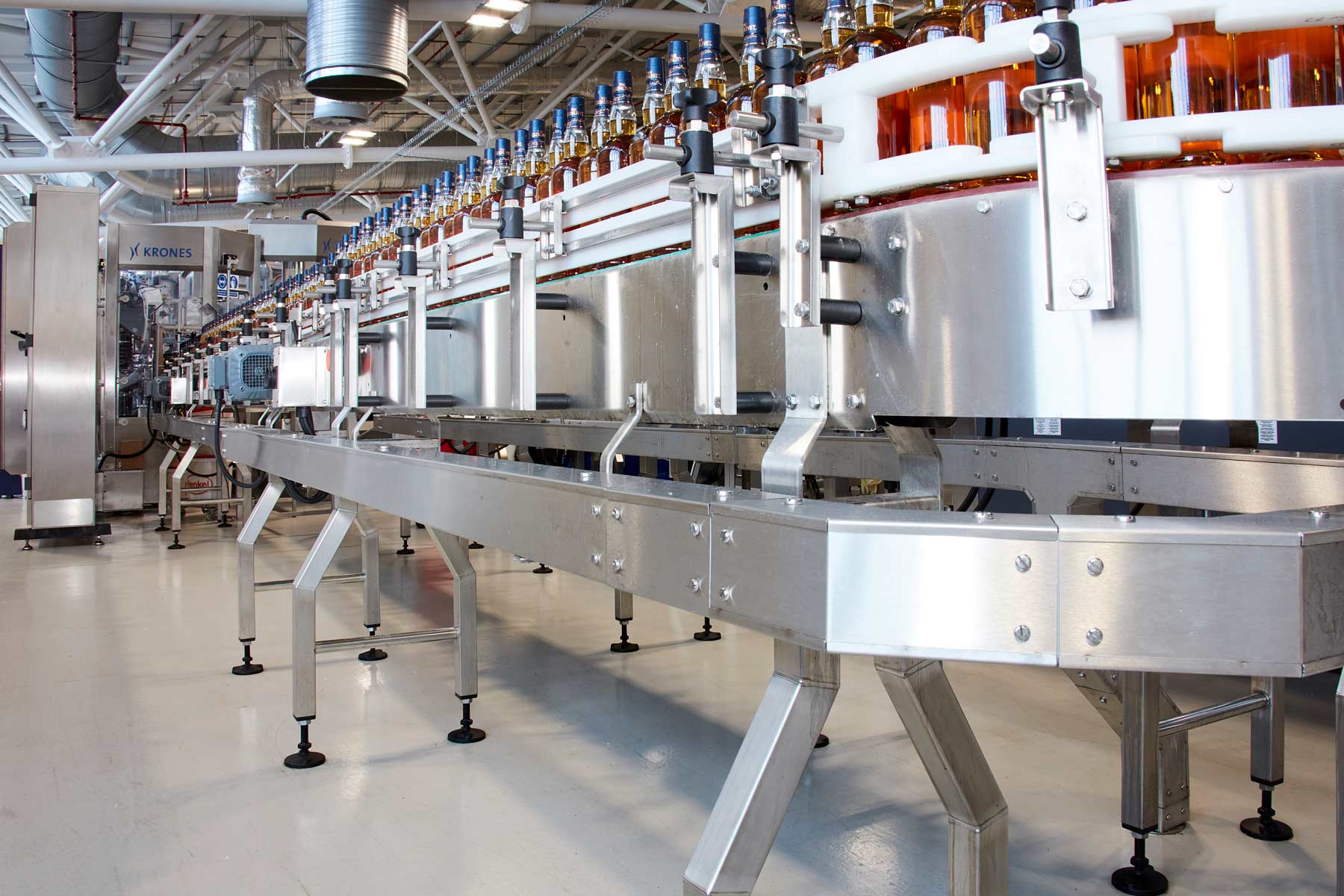
Stainless steel NEMA 1 wireways are a traditional enclosed cable management system designed to protect electrical wiring from physical damage and environmental exposure. Lasnek have supplied these systems to both end users and contactors supporting production facilities -including bottling plants - for over 25 years.

Advantages

Protection & Hygiene

  • The enclosed construction design provides physical protection of both the wiring and void from ingress of falling debris and liquids and debris
  • While the construction provides strength, cables can easily be accessed by removing the cover
  • NEMA Type 1 systems, while offering limited water ingress protection, are designed as 'lay-in' systems, providing the advantage of quick and easy cable installation and removal
  • Should the application require additional ingress protection, a ‘pull through’ NEMA 4X is available
  • Both systems are available in either 304 or 316 grade stainless
  • Allows for easy cleaning of all external surfaces.

Installation

  • Quick and easy to install. All Lasnek lengths and fittings are supplied with covers and joining hardware
  • Type 1 is supplied in 3m / 10ft lengths and can be cut onsite using standard cutting equipment and practices
  • A wide range of pre-made fittings is available, helping to reduce on-site fabrication time
  • A wide range of widths and heights is available, with Lasnek supplying up to 24” wide options

EMI & Cable Segregation

  • Good protection from radiated EMC interference internal or external
  • Cable barriers available for segregation of cables for both lengths and fittings

Disadvantages

Installation

  • Additional layout planning its typically required
  • Specific cover fitting types and angles will need to be ordered prior
  • Onsite cutting restrictions in live areas
  • Additional fabrication requirements can lead to increased labor costs
  • Available bracket and supports may not suit every application

Heat Management

  • Stainless steel is a poor conductor for heat dissipation
  • Compliance with NEC wire fill rate regulations may require larger wireways
  • Potential de-rating of conductors may be necessary to prevent localised overheating

Cost Implications

  • Increased product material leads to higher initial purchase costs
  • Wireway lengths are volumetric products, which can result in higher logistics costs such as storage and shipping
  •  Shipping 10ft / 3M lengths only through pallets freight companies with time and cost implications

Stainless Steel NEMA 4X 

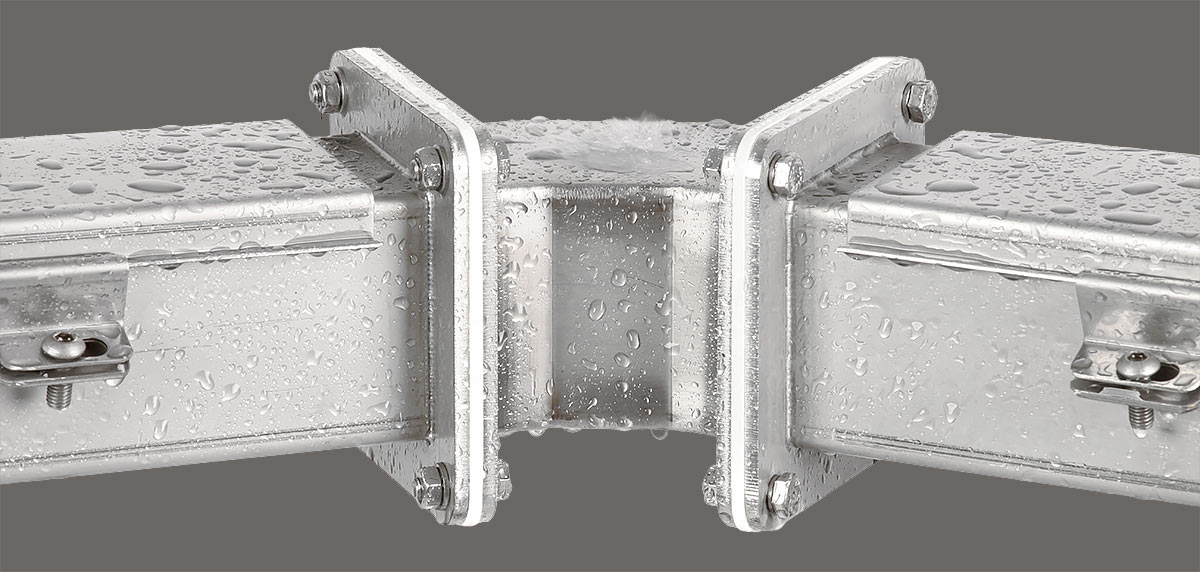
Stainless steel NEMA 4X wireways are an advancement of the type 1, 3 or 12 wireways, and offer the installer / user a reliable watertight solution for protecting cables from unwanted ingress. With a fixed hinged cover and welded connecting flanged at each end, this system is known as a pull-through system rather than a lay-in system for the lower rated wireway systems.

Advantages

Installation

  • Easily assembled

  • Lengths can be mounted with opening on any side

  • Silicon sealed flanges and cover

  • Easy clean

  • Pre-cut sections for user modifications

  • High degree of cable protection

  • Extremely robust construction

  • Supplied in pre-cut lengths 2ft through 10ft

  • Fully welded fittings (no cover) – one type for all configurations

Hygiene and Protection

  • Guaranteed high ingress protection against liquids and solids

  • Matt finish

  • Can be power cleaned

  • High degree of mechanical protection

  • Fittings designed for reduced debris collection

  • FDA approved seals and gaskets

EMC & Cable Segregation

  • High degree of protection from radiated EMC interference (internal or external)

  • Cable barriers available for segregation of cables – lengths only

Disadvantages

Installation

  • Additional layout planning is typically required

  • Lengths cannot be cut / reduced on site

  • Bracketry may have to be fabricated to site-specific requirements

  • Cut-down units may be needed to maintain 4X integrity

  • Additional installation volume required due to the external flanges

  • Limited sizes: 2.5”, 4”, 6”, 8”

Heat Management

  • Stainless steel is a poor conductor for heat dissipation

  • Compliance with NEC wire fill rate regulations may require larger wireways

  • Potential de-rating of conductors may be necessary to prevent localised overheating

Cost Implications

  • Higher purchase costs due to design

  • Additional shipping cost due to increased weight and volume

  • Additional installation design costs

Stainless Steel Wire Basket Tray

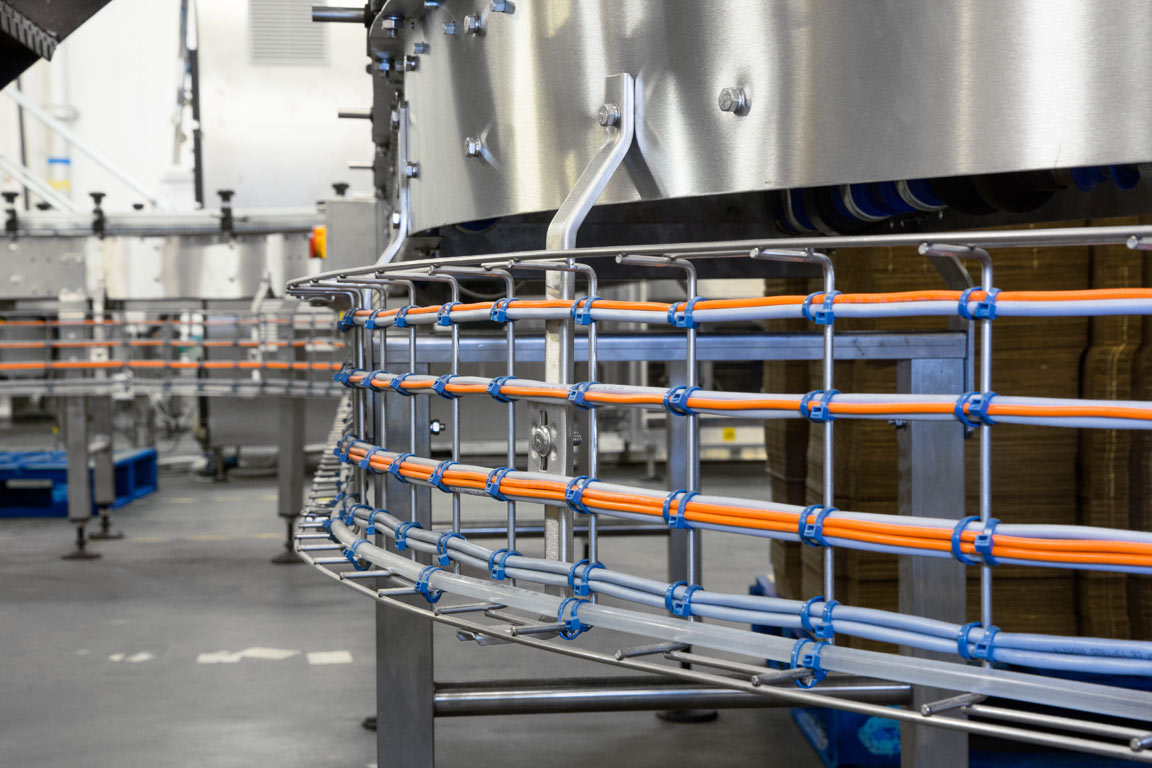
Wire basket trays, constructed from stainless steel wires, are an open cable support system. Originally designed for high-level applications in the building services industry, these systems have increasingly been used at low level on machinery within production areas in recent years. Typically supplied only as lengths, any fittings such as bends or tees are fabricated on site by cutting wire sections from the lengths.

Advantages

Installation

  • Typically, only lengths are purchased, making the ordering process straightforward and efficient

  • Baskets can be joined using additional couplers or welded

  • Bends and angles are easily formed by cutting specific wires from the basket length

  • Offers the flexibility to form complex angles, making it ideal for intricate installations

  • Can be cut in live areas using bolt croppers or pneumatic cutting equipment

  • Easy to ship and store

  • Multiple freight options available for smaller dimensions or quantity

  • Available in a wide range of dimensions up to 24” / 600mm

Ventilation

  • Typically, cables do not need de-rating

  • NEC specifications allow for a higher fill rate compared to enclosed wireways

  • Provides increased usable area both vertically and horizontally, maximising tray capacity

Cost

  • Reduced cost due to less material used per length

  • Indirect savings through fewer parts required and ordered

  • Reduced logistic costs for shipping and storage

Disadvantages

Protection & Hygiene

  • The open design can leave cables exposed to physical damage, contamination, or interference

  • An open system is potentially more susceptible to unwanted debris and trap areas

  • All cables will require appropriate glanding techniques at control panels or auxiliary equipment

  • Exposed cables should not be bundled together but individually secured

  • Limited cleaning options

Installation

  • Correct cable clipping procedures are dependent on the skill and experience of the installation team

  • All bends need manufacturing on site, adding to labor time

  • Some tray manufacturers state the maximum distance that couplers and joins can be from any support, limiting position

  • Inferior products may require additional supports to prevent excessive tray deflection

  • Additional earth continuity and bonding may be required due to the removal of wires when forming bends

  • Installation needs to be undertaken by an experienced installer to avoid poor aesthetics

Cost

  • Higher labor cost has to be offset against lower material costs

  • Additional costs for fixings, joiners, brackets, and hardware can increase overall costs

  • Length costs are generally proportional to the number and thickness of wires used